

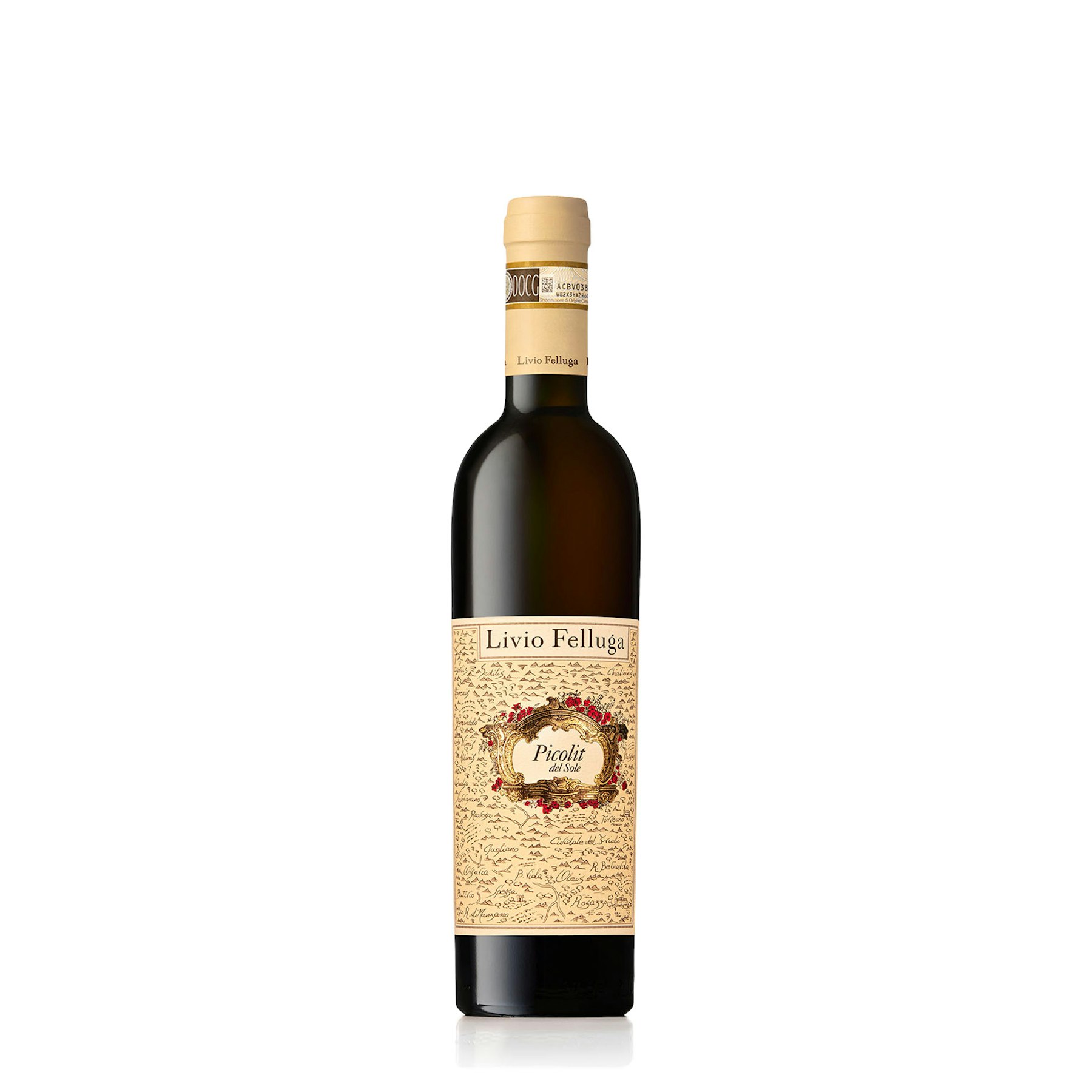
Picolit 2019
Tasting notes
Color: Gold golden yellow.
Nose: Deep and layered, with notes of dried apricot, candied orange peel and clear-cut hints of dried figs. Moving the wine in the glass, chestnut honey and caramelised hazelnut emerge, while hints of powdered sweet spices appear in the background.
Palate: Mouth-filling and surprisingly lingering. The typical sweetness of dates and dried grapes, is energised by moderate acidity, with echoes of citrus marmalade and Bourbon vanilla. A nuance of black tea and sun-dried dried fruit enhance the luxurious and noble finish of an impressively complex wine.
Pairings
A wonderful ‘meditation wine’ and ideal partner for flavoursome strong or blue cheeses. Also perfectly matched with tea biscuits and excellent with foie gras.
Why we like it
Picolit is Friuli’s noblest wine, but its origins are still a matter for debate. It is only since 1750, thanks to the writings of Count Fabio Asquini, that we have any accurate documentation of this “nectar produced by the meager berries of the bunch”. The peculiarity of this odd, delicate vine is the partial fertilization of its flowers. This means that only a few, very concentrated berries ripen in each bunch. A complex wine the color of old gold, Picolit marries sweet and acidulous sensations, releasing a pervasive aroma of candid peel, vanilla and spring flowers. In the past, Picolit was the wine of Europe’s nobility. Today, it is admired as a prestigious meditation wine. Mainly trained in the Cappuccina system, the vines of our Picolit benefit from marl and sandstone soils of Eocene origin. The 2015 harvest took place from early October to the end of November. The healthy and perfectly ripe grapes are harvested by hand according to ripeness, in small crates, to preserve the integrity of the berry. Carefully destemmed, the fruit is then soft crushed and the must obtained is allowed to settle. The must ferments at controlled temperature in small casks of French oak. After fermentation, the wine settles on the lees to enhance savoriness, creaminess and aging potential.